Do nootropic peptides actually improve focus?

The short answer
Not in the way the marketing implies. No large, rigorous trial shows that Semax, Selank, or a related peptide reliably improves focus in healthy adults. The mechanisms (BDNF, dopamine, serotonin, GABA) come mostly from animal studies, and the human data are small, mostly older Russian trials that often measured anxiety, stroke recovery, or brain scans rather than focus.
“Do nootropic peptides actually improve focus?” is the question underneath most of the hype about Semax, Selank, and the wider “Russian peptide” category, and it deserves a straight answer rather than a sales pitch. The honest version is uncomfortable for anyone selling them: the mechanisms are genuinely interesting, but the evidence that these peptides sharpen focus in healthy people is thin, largely preclinical, and mostly drawn from small, older Russian studies that never measured “focus” the way the marketing implies. This page walks through what the published science actually shows, separates animal findings from human ones, names the quality problems plainly, and sets that against what people in the nootropic community report.
Do nootropic peptides actually improve focus?
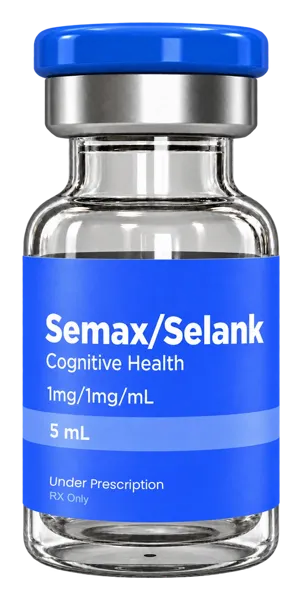
Based on the published evidence, there is no rigorous demonstration that nootropic peptides reliably improve focus in healthy adults. What exists is a plausible biological rationale plus a scattering of small human studies, most of which measured something other than sustained focus, and none of which is a large, blinded, independently replicated trial. The peptides marketed for focus, chiefly Semax and Selank, are research compounds with real mechanistic findings in animals and only preliminary human data. So the truthful answer sits between “there is a scientific reason people think it might help” and “this is proven to work,” and it is much closer to the first than vendors suggest.
That gap between mechanism and proof is the entire story, so it is worth stating the framing up front. A finding that a peptide raises a growth factor in a rat brain, or shifts a brain-network signal on a scan, tells you the compound is biologically active. It does not tell you that a person will concentrate better, remember more, or perform on a task. Those are different claims requiring different, larger studies, and for focus specifically, those studies have not been done. For the deeper single-peptide picture, see our companion explainer on what Semax is studied for and the head-to-head on Selank versus Semax.
What do human studies actually show?
The human evidence for these peptides is limited to small, mostly older Russian trials, and much of it is not even about focus. This is the single most important thing to understand, because “studied in humans” is technically true and deeply misleading about what was studied.
For Semax, the most-cited early human report is a 1996 study describing it as showing “nootropic-like activity in humans,” in which intranasal doses in the range of roughly 16 micrograms per kilogram were associated with short-term improvements in attention and short-term memory in healthy volunteers (Kaplan et al., 1996). That is the closest thing in the literature to a direct “focus” finding, and it is a small, decades-old study using the deliberately modest phrase “nootropic-like activity.” The most rigorous modern human Semax data are imaging studies, not performance trials: a 2018 resting-state fMRI experiment in 24 healthy adults (14 given Semax, 10 placebo) found that “A greater volume of the default mode network rostral (medial frontal cortex) subcomponent was detected in the Semax group in comparison with controls,” and concluded the scan “confirmed Semax effects on the neuronal network of the brain” (Lebedeva et al., 2018). That is a brain-network signal in two dozen people, not a demonstration that anyone focused better. Separately, Semax has a human clinical trial in acute ischemic stroke: 110 patients, where “Administration of semax and high BDNF levels accelerated the improvement and ameliorated the final outcome of Barthel score index” (Gusev et al., 2018). But stroke rehabilitation is an emergency medical context, not a focus benefit in healthy people.
For Selank, the strongest human data are about anxiety, not focus. A trial compared Selank to the benzodiazepine medazepam in 62 patients with generalized anxiety disorder and neurasthenia, and reported that “The anxiolytic effects of both drugs were similar but selank had also antiasthenic and psychostimulant effects” (Zozulia et al., 2008). The “antiasthenic and psychostimulant” note is the thread people pull on to claim a focus benefit, but the trial was designed and powered to measure anxiety in a clinical population, not attention in healthy adults. The only human study we found that tested both peptides against placebo in healthy people was a brain-imaging study: 52 healthy participants received Semax, Selank, or placebo, and resting-state fMRI looked at connectivity of the amygdala and of the dorsolateral prefrontal cortex, a key region for working memory. The reported effects were on connectivity between the right amygdala and the right temporal cortex (Panikratova et al., 2020), again a brain-network signal, with no performance test of focus. Read together, the human record is a handful of small studies, split across attention, brain imaging, stroke, and anxiety, with no large trial in any of them establishing a durable focus benefit.
What do the animal and lab studies show?
Almost all of the mechanistic case for these peptides comes from animals and cell studies, and it is genuinely interesting, which is precisely why it is so easy to overstate. The strongest, most detailed findings are the ones furthest from a human focus outcome.
For Semax, the headline mechanism is brain-derived neurotrophic factor (BDNF), a growth factor central to learning and memory. In a frequently cited rat study, “a single application of Semax (50 microg/kg body weight) results in a maximal 1.4-fold increase of BDNF protein levels” along with increases in its TrkB receptor and the relevant messenger RNA in the hippocampus, leading the authors to conclude that “Semax affects cognitive brain functions by modulating the expression and the activation of the hippocampal BDNF/trkB system” (Dolotov et al., 2006). On the neurotransmitter side, a rodent study reports that “Semax, an ACTH(4-10) Analogue with Nootropic Properties, Activates Dopaminergic and Serotoninergic Brain Systems in Rodents” (Eremin et al., 2005), dopamine and serotonin being the systems tied to motivation and attention. And in rat stroke models, gene-expression work found Semax “suppressed the expression of genes related to inflammatory processes and activated the expression of genes related to neurotransmission” (Filippenkov et al., 2020), and separately “enhanced the expression of Bdnf mRNA in the cortex of ischemic rats” (Dmitrieva et al., 2009).
For Selank, the parallel mechanistic story runs through GABA, the brain’s main calming neurotransmitter. In male Wistar rats, Selank was shown to “influence the specific binding of GABA to GABAA receptors” and to increase the affinity of diazepam to those receptors, which fits its anxiety-focused profile (Kasian et al., 2017). Every finding in this section is real and was generated in rats or in tissue, not in people. That is the crux: a mechanism demonstrated in an animal is a reason to run a human trial, not a substitute for one. As the Semax transcriptome authors themselves caution, its “molecular mechanisms of action within the brain are not yet fully understood” (Filippenkov et al., 2020).
Why is the evidence considered low quality?
Independent of any single study, the body of evidence has structural weaknesses that keep it from supporting a confident “it improves focus” claim: small samples, older studies, near-total reliance on one national research tradition, biomarkers standing in for real outcomes, and no large randomized trial for cognition in healthy adults. These are not nitpicks; they are the exact features that separate promising early science from established fact.
Three limitations deserve to be named directly. First, replication and geography: most human research on these peptides was conducted in Russia, with limited independent Western validation, so the usual confidence-builders (replication by unaffiliated groups, publication in top-tier international journals, and review by multiple regulators) are largely absent. Second, the outcome gap: the most detailed findings are animal mechanisms (BDNF, dopamine, serotonin, GABA) or human biomarkers (an fMRI signal in 24 people), while direct measures of focus in healthy adults are confined to one small, early study. “A growth factor rose in a rat” and “a brain network looked different on a scan” are both real and both several steps short of “healthy adults reliably concentrate better.” Third, scale and design: there is no large, blinded, placebo-controlled trial of any of these peptides for focus in healthy people. Until studies of that size and rigor exist, statements that nootropic peptides “work” for focus are running well ahead of the data.
Evidence for nootropic peptides at a glance
The table maps what has actually been measured, and where, so the evidence level behind each common focus-adjacent claim is visible rather than blurred. “Biomarker” means a biological measurement (a gene, protein, or brain-network signal), which is not the same as a demonstrated change in how a person thinks or performs.
| Attribute | Animal & lab studies | Human studies |
|---|---|---|
| BDNF / neurotrophic signaling (Semax) | Raised in rat hippocampus after a single dose (Dolotov 2006) | Associated with better stroke recovery in a clinical trial, not a focus study (Gusev 2018) |
| Dopamine & serotonin activation (Semax) | Shown in rodents (Eremin 2005) | Not directly measured in humans |
| GABA modulation (Selank) | Shown in rats (Kasian 2017) | Not directly measured in humans |
| Direct focus / attention outcome | Not the focus of the animal work | One small early study reported short-term attention and memory gains (Kaplan 1996) |
| Brain-network (fMRI) activity (Semax) | Not applicable | One 24-person study found a default-mode-network difference (Lebedeva 2018) |
| Anxiety (Selank) | Anxiolytic effects modeled in rodents (Kasian 2017) | Comparable to medazepam in a 62-patient trial (Zozulia 2008) |
| Large double-blind Western focus trial | Not applicable | None published |
| FDA approval | Not approved for any use | Not approved for any use |
What about side effects and product quality?
The honest answer on side effects is that the human studies are too small and too short to characterize them, and no large safety trial of any of these peptides exists. The published trials enrolled dozens of people, not thousands, and none followed healthy users taking a peptide for months to sharpen focus, which is how they are actually used. The one hint in the trial data is in the other direction from a sedative: the Selank anxiety trial reported antiasthenic and psychostimulant effects alongside anxiety relief (Zozulia et al., 2008). “No large study has found a problem” is not the same as “studied and found safe.”
Product quality is the more concrete risk, and it depends on the source. Independent laboratory analysis of falsified peptide drugs on one national market documented “a high variation in amount of drugs per unit,” “a low purity (ranging between 5% and 75% for cysteine containing peptides),” and contamination with toxic elements including arsenic at levels “up to ten times the ICH toxicity limit for parenteral drugs” (Janvier et al., 2018). An untested product stacks two unknowns: a compound not proven to improve focus, from a source whose contents are unverified. Who made it, whether it was tested, and whether a clinician is involved matter as much as which peptide it is.
What are people saying about nootropic peptides and focus?
The community is far more confident than the literature. Our Community Insights summaries (13 Semax posts and 9 Selank posts on X, July 2026) found people routinely labeling Semax as the focus peptide and describing sharper attention, pattern recognition, and skill building, usually as part of wider stacks with Selank and other focus-oriented compounds. Selank is mostly discussed for anxiety, with Semax and Selank framed as a focus-plus-calm pair. None of the posts report measured outcomes, and the summaries label the reports anecdotal. That is the gap this page keeps returning to: confident personal descriptions of better focus, and almost no controlled measurement of focus in healthy people. For each peptide’s research in depth, see what Semax is studied for and Selank and the anxiety and stress response.
What this means if focus is your goal
If your real goal is sharper focus and better attention, the honest takeaway is that nootropic peptides are not a proven shortcut. Everything on this page points the same direction: the mechanisms are interesting and mostly demonstrated in animals; the human data are small, older, and largely Russian, and frequently measure anxiety, stroke recovery, or brain-network signals rather than focus itself; there is no large double-blind Western trial for focus; and product quality depends on the source. That is the factual base a good decision starts from.
A useful next step is a clinical conversation about the outcome you actually want: an evaluation in which a licensed provider looks at the many evidence-backed drivers of focus that have nothing to do with peptides, such as sleep, stress, and medical causes, and determines what is suitable for your situation. For how peptides stack up against caffeine and L-theanine, see nootropic peptides vs traditional nootropics.
Status: Semax: Not FDA-approved; sold by some telehealth providers as a compounded prescription. An FDA advisory committee reportedly voted in July 2026 to recommend allowing pharmacies to compound it; nothing has changed yet. Selank: Not FDA-approved; sold by some telehealth providers as a compounded prescription. What these status terms mean.
Educational information only, not medical advice. Every efficacy statement on this page is sourced to the peer-reviewed literature linked above; community statements summarize our Community Insights data and are anecdotal. Drafted with AI assistance and fact-checked against the cited primary sources. Updated October 12, 2026.
Sources (11)
Advertising disclosure: links marked "Paid link" go to Bodybuilding Peptides (trybbpeptides.com), an affiliate destination, and Cognition Protocols may earn a commission if you buy there. Our coverage is independent of that relationship, and nothing on this page is medical or legal advice.
 See it at Bodybuilding Peptides