What does Semax peptide do? How it works, what the studies show, and the ADHD question

The short answer
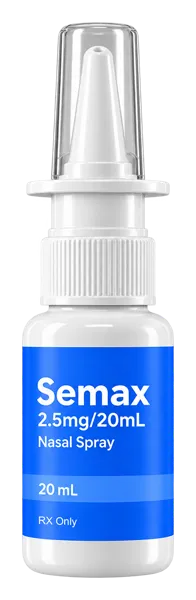
Semax is a seven-amino-acid peptide built from a fragment of the hormone ACTH and given as a nasal spray. In rats it raises the growth factor BDNF and activates dopamine and serotonin systems. In people, a few small, mostly Russian studies report short-term attention effects. There are no published ADHD trials; that idea rests on a 2007 hypothesis paper.
If you have spent time in nootropics forums, you have seen Semax described as a Russian “smart drug” nasal spray that sharpens focus, lifts mood, boosts BDNF, and, more recently, helps with ADHD, often with more confidence than any of the underlying studies earn. This page is a straight read of what Semax does according to the published science. The short version: the mechanism is genuinely interesting, most of it has been demonstrated in animals, the human data are small and largely older Russian work, and the ADHD idea has no trials behind it. For the general substance overview, see the Semax overview on The Treatment Report; this page goes deeper on the brain research and the ADHD question.
What does Semax peptide do?
According to the studies, Semax mainly does two things in the brain: it raises brain-derived neurotrophic factor (BDNF), a growth factor tied to learning and memory, and it activates dopamine and serotonin systems (Dolotov et al., 2006; Eremin et al., 2005). Both findings come from rodents. In people, the evidence is a small 1996 study reporting short-term gains in attention and short-term memory (Kaplan et al., 1996) and a 24-person brain-scan study showing a change in brain-network activity (Lebedeva et al., 2018). In Russia it has also been used in stroke care. What it has not shown is a proven, large-trial cognitive benefit in healthy adults.
What is Semax?
Semax is a synthetic heptapeptide, seven amino acids in the sequence Met-Glu-His-Phe-Pro-Gly-Pro, derived from a small fragment of the hormone ACTH and developed in Russia as an intranasal neuropeptide. More precisely, it is built from the 4–7 stretch of adrenocorticotropic hormone with a C-terminal Pro-Gly-Pro (PGP) tail added on; as one primary source puts it, “Synthetic heptapeptide Semax (Met-Glu-His-Phe-Pro-Gly-Pro) consists of a fragment of ACTH(4–7) and a C-terminal PGP (Pro-Gly-Pro) tripeptide that augments the peptide’s stability” (Dmitrieva et al., 2009). It is most often described in the older literature as an analog of the ACTH(4–10) fragment (Dolotov et al., 2006).
Two structural points matter for understanding it. First, Semax is built from only a short internal fragment of ACTH, the part associated with effects on nerve tissue, rather than the whole hormone, which is why the research literature characterizes it as a “synthetic melanocortin derivative” and studies it for effects on the brain rather than as a hormone that stimulates the adrenal glands (Filippenkov et al., 2020); a 2007 paper describes it as “completely devoid of any hormonal activity” (Tsai, 2007). Second, the added Pro-Gly-Pro tail is there to slow the peptide’s breakdown, which is part of why it can be given as a nasal spray at all (Dmitrieva et al., 2009). It was developed by researchers connected to the Institute of Molecular Genetics of the Russian Academy of Sciences, and essentially all of its clinical history sits inside Russia and neighboring countries, a fact that shapes everything about how to read the evidence below.
How does Semax work?
Semax is thought to work mainly by raising levels of BDNF and by activating the dopamine and serotonin systems, but almost all of that mechanistic evidence comes from animals. BDNF is a growth factor that supports the survival of neurons and the strengthening of connections between them, and it is central to learning and memory. In a frequently cited rat study, “a single application of Semax (50 microg/kg body weight) results in a maximal 1.4-fold increase of BDNF protein levels accompanying with 1.6-fold increase of trkB tyrosine phosporylation levels, and a 3-fold and a 2-fold increase of exon III BDNF and trkB mRNA levels, respectively, in the rat hippocampus” (Dolotov et al., 2006). TrkB is BDNF’s main receptor, so the finding is that Semax nudged both the growth factor and the machinery that responds to it, in the hippocampus, a brain region tied to memory. The same authors concluded that “Semax affects cognitive brain functions by modulating the expression and the activation of the hippocampal BDNF/trkB system.”
The neurotransmitter side of the story is similar in shape. A rodent study titled directly for its finding reports that “Semax, an ACTH(4-10) Analogue with Nootropic Properties, Activates Dopaminergic and Serotoninergic Brain Systems in Rodents” (Eremin et al., 2005), dopamine and serotonin being the systems most associated with motivation, mood, and attention. A more recent rat study extends the BDNF thread to stress: in male rats put through a chronic unpredictable stress model, daily Semax “reversed or substantially attenuated” stress-induced anhedonia (loss of interest in reward), weight-gain suppression, adrenal enlargement, and a drop in hippocampal BDNF, though neither the stress procedure nor the peptide changed immobility in the forced swim test (Inozemtseva et al., 2024). That is the closest the literature comes to the “mood” claim you see online, and it is a rat study with injected peptide, not a human trial.
In stroke models, gene-expression work shows Semax shifting the brain’s transcriptional program: after experimental ischemia, “Semax suppressed the expression of genes related to inflammatory processes and activated the expression of genes related to neurotransmission,” which the authors frame as a “compensation of mRNA expression patterns that are disrupted during ischaemia–reperfusion conditions” (Filippenkov et al., 2020). A related paper found that Semax “enhanced the expression of Bdnf mRNA in the cortex of ischemic rats” and concluded it “contributes to the survival of ischemic cells by enhancing the transcription not only of neurotrophins, but also of their high-affinity receptors” (Dmitrieva et al., 2009).
Every one of those mechanistic findings is real and interesting, and every one was generated in rats or in tissue, not in people. The authors themselves are careful about how much is settled: as the 2020 transcriptome paper notes, Semax “has been used successfully in the treatment of patients with severe impairment of cerebral blood circulation. However, its molecular mechanisms of action within the brain are not yet fully understood” (Filippenkov et al., 2020). So the honest framing is: there is a plausible, partly-mapped mechanism for how Semax could support cognition, demonstrated mostly in animals, not a proven chain from spray to sharper thinking in humans.
What does the human research on Semax and cognition actually show?
The human evidence that Semax improves cognition is limited to a handful of small, mostly older Russian studies, and it points to modest, short-term effects rather than a proven cognitive enhancer. The most-cited early human report is a 1996 study describing Semax as displaying “nootropic-like activity in humans,” in which intranasal doses in the range of roughly 16 micrograms per kilogram were associated with short-term improvements in attention and short-term memory in healthy volunteers (Kaplan et al., 1996). That is a genuine finding, but it is also a small, decades-old study, and “nootropic-like activity” is a deliberately modest phrase: it describes a measurable effect on a test, not a life-changing enhancement.
The developers’ own 15-year summary, published in 1997, goes further, stating that Semax “significantly improves memory and attention in healthy men under extreme conditions of activities” and that effects in animals and people lasted 20 to 24 hours after a nasal dose (Ashmarin et al., 1997). It is worth reading for the history, but it is a review written by the team that designed the peptide, in a Russian-language journal, and it is not an independent test.
The most rigorous recent human data are imaging studies rather than performance trials. In a 2018 resting-state fMRI experiment in 24 healthy adults (14 given Semax, 10 given placebo), “A greater volume of the default mode network rostral (medial frontal cortex) subcomponent was detected in the Semax group in comparison with controls,” and the authors concluded that the scan “confirmed Semax effects on the neuronal network of the brain and demonstrated topography of these effects” (Lebedeva et al., 2018). This is useful, it shows the peptide does something detectable to human brain activity, but note what it is and is not: two dozen people, a brain-network measurement, and no claim that anyone thought, remembered, or performed better as a result. A change on an fMRI map is a biomarker, not a demonstrated cognitive outcome.
Put those together and the human picture is thin: a small old study reporting short-term attention and memory effects, a developer review describing more of the same, a small modern study showing a brain-network signature, and very little in between. There is no large, independent, double-blind Western trial establishing that Semax reliably improves memory, focus, or cognition in healthy adults. For a wider look at whether any peptide in this category delivers on focus, see do nootropic peptides actually improve focus?
Is Semax used for ADHD?
Semax is not an established ADHD treatment, and we found no clinical trial testing it in ADHD. A PubMed search for Semax with attention-deficit and hyperactivity terms, run on October 12, 2026, returned no ADHD trials, and the ClinicalTrials.gov registry listed no registered studies of Semax for any condition (ClinicalTrials.gov search). The ADHD idea traces to a single 2007 hypothesis paper, not to patient data.
That paper, by Shih-Jen Tsai in the journal Medical Hypotheses, argued, largely from animal findings, that Semax “may have good therapeutic potential in ADHD” (Tsai, 2007). The reasoning: ADHD is thought to involve dopamine and BDNF function, and in animal studies Semax “can augment the effects of psychostimulants on central dopamine release and also stimulates central brain-derived neurotrophic factor (BDNF) synthesis.” The paper also noted that some patients do not respond to stimulants such as methylphenidate or cannot tolerate their side effects, which is why an alternative was being floated. A hypothesis paper proposes an idea for others to test; it contains no new experiment, and nearly two decades later we found no published trial that tested it.
So when you see Semax framed online as an ADHD peptide, treat that as a claim built on its focus reputation and on a plausible but untested mechanism. In the 13 Semax posts on X that our Community Insights summary analyzed (July 2026), people described using it for focus, attention, and pattern recognition; none of the summarized themes were about ADHD. One point is worth flagging for anyone already taking stimulant medication: the same paper’s observation that Semax can amplify stimulant-driven dopamine release in animals is exactly the kind of interaction that has never been studied in people, which makes it a question for the prescriber rather than a reason to experiment.
What has Semax been studied and used for in stroke?
In Russia, Semax has been studied and used clinically in the setting of acute ischemic stroke, where the research focuses on protecting brain tissue and reducing inflammation rather than on any claim of a cure. The primary literature states plainly that the peptide “has been used successfully in the treatment of patients with severe impairment of cerebral blood circulation” (Filippenkov et al., 2020), and that it “has been successfully used for some years for the clinical treatment of stroke, brain hypoxia, and brain trauma” (Dmitrieva et al., 2009). Those are descriptions of Russian clinical practice, and they are the closest thing Semax has to real-world outcome evidence.
The mechanistic stroke work helps explain the interest. In rat models of ischemia and reperfusion, where blood flow is cut off and then restored, the pattern that damages tissue after a stroke, Semax shifted gene expression away from inflammation and toward neurotransmission and neurotrophin support (Filippenkov et al., 2020; Dmitrieva et al., 2009). That is a biologically coherent story for why a neurotrophic peptide might help injured brain tissue. But two cautions apply. First, the strongest data here are again from animals; the human clinical use, while real, has not been reproduced in large randomized trials outside Russia. Second, acute stroke care is an emergency medical situation, not a nootropic use case; nothing about Russian stroke protocols translates into a self-directed “brain-boosting” spray, and this page should not be read as endorsing that leap.
Which online Semax claims have evidence behind them?
The table below lines up the claims you see most often about Semax against what has actually been measured, in animals and in humans, so the evidence level behind each one is visible rather than blurred. “Biomarker” means a biological measurement such as a gene, protein, or brain-network signal; it is not the same as a demonstrated change in how a person thinks, remembers, or recovers.
| Attribute | Animal & lab studies | Human studies |
|---|---|---|
| Boosts BDNF / TrkB | Raised in rat hippocampus after a single dose (Dolotov 2006); restored in a rat stress model (Inozemtseva 2024) | Not directly measured in the published human trials |
| Raises dopamine & serotonin | Activated in rodents (Eremin 2005) | Not directly measured in humans |
| Sharper attention & memory | Reported in the developers’ review of animal work (Ashmarin 1997) | Small, early study reported short-term gains (Kaplan 1996); developer review (Ashmarin 1997) |
| Changes brain-network activity | Not applicable | One 24-person study found a default-mode-network difference (Lebedeva 2018) |
| Lifts mood / blunts stress | Reversed stress-induced anhedonia in male rats (Inozemtseva 2024) | Not studied |
| Helps ADHD | Proposed from dopamine and BDNF findings in a 2007 hypothesis paper (Tsai 2007) | No trials found |
| Protects the brain after stroke | Anti-inflammatory gene-expression shifts in rat ischemia models (Filippenkov 2020; Dmitrieva 2009) | Used in Russian clinical practice; not characterized in large randomized trials elsewhere |
| Large double-blind efficacy trial | Not applicable | None published |
How strong is the evidence, really?
The honest assessment is that the evidence for Semax is early-stage: small sample sizes, older studies, heavy reliance on a single national research tradition, and biomarkers frequently standing in for real-world outcomes. This is not a criticism of the individual studies, several of which are careful pieces of work. It is a statement about the body of evidence as a whole, and it is the single most important thing to understand before spending money or making a decision. PeptideAgent’s Semax profile says the same of the stroke studies: they were open label, published in Russian, and not independently replicated.
Three limitations deserve to be named directly. First, geography and replication: the human studies cited on this page all come out of Russian research groups, and the ClinicalTrials.gov registry lists no registered Semax studies at all (ClinicalTrials.gov search). When a compound’s evidence base sits almost entirely within one country’s research and clinical tradition, the usual cross-checks that build confidence, replication by unaffiliated groups and publication in the highest-tier international journals, are largely missing. Second, the outcome gap: the strongest and most mechanistically detailed findings (BDNF, dopamine and serotonin, transcriptome shifts, the stress model) are animal data, while the human data lean on small studies and biomarkers such as fMRI signals rather than large, blinded tests of memory or focus. “A growth factor went up in a rat” and “a brain network looked different on a scan in 24 people” are both real, and both are several steps short of “healthy adults reliably think better.” Third, scale: there is no published large randomized controlled trial of Semax for cognition in healthy people, and none at all in ADHD. Until studies of that size and rigor exist, statements that Semax “works” as a cognitive enhancer are running ahead of the data.
What are people who use Semax saying?
People in the nootropic community mostly describe Semax as their focus peptide. Our Community Insights summary of 13 Semax posts on X (July 2026) found users labeling it as the focus peptide in lists of popular peptides, and individual users describing it as part of routines aimed at sharper attention, pattern recognition, and skill building. Users describe taking it as a nasal spray and report cycling it with breaks rather than using it continuously.
Many place it inside wider stacks. The most common pairing is Semax for focus with Selank for calm, and some posters list it next to phenylpiracetam, bromantane, and modafinil-type compounds; some favor what they call amidated variants. The summary’s own sentiment note calls its read of the mix an anecdotal impression, not a measurement. The posts describe personal impressions, not measured outcomes. That gap is the same one this page has traced through the research: a plausible mechanism and a lot of confident description, with little rigorous measurement of whether healthy people actually think better. For how Semax and Selank are compared and paired, see our Selank vs Semax comparison and the shorter nootropic peptides overview.
What is known about Semax safety and side effects?
Semax’s safety record in humans comes almost entirely from decades of intranasal clinical use in Russia, not from large independent Western safety trials, so its long-term safety in the way people use it outside a clinic is not well characterized. Within its clinical use it has generally been regarded as well tolerated; the developers’ 1997 review reported that “in no case it produced negative side actions or complications connected with its administration” (Ashmarin et al., 1997). But a developer’s own summary is a much narrower basis than a fully characterized safety profile, particularly for healthy people self-administering it for months to improve focus, a use no rigorous trial has evaluated for safety. Interactions with stimulant medication, discussed in the ADHD section above, have not been studied in people.
A separate and concrete risk is what is actually in the bottle or vial, which depends on who made it and whether anyone tested it. Independent laboratory analysis of the falsified peptide drugs most frequently encountered on one national market has documented exactly the problems you would fear: “a high variation in amount of drugs per unit,” “a low purity (ranging between 5% and 75% for cysteine containing peptides),” and contamination with toxic elements, including arsenic at levels “up to ten times the ICH toxicity limit for parenteral drugs” (Janvier et al., 2018). An untested product stacks two unknowns on top of each other: a compound whose long-term human safety is not established, delivered by a source whose contents are unverified. For an injectable version rather than the intranasal formulation used in the Russian literature, sterility adds a third. Our companion piece on Semax nasal spray versus injection weighs those two delivery forms against each other and the evidence behind each.
What this means if focus, memory, or recovery is your goal
If your real goal is sharper focus, better memory, or faster cognitive recovery, the Semax story is genuinely interesting at the level of mechanism and genuinely thin at the level of human proof. The neurotrophic, neurotransmitter, and stress findings are mostly from animals; the human cognition data are small, older, and largely Russian; there is no large double-blind trial and no ADHD trial; and product quality depends on the source. Those are the facts a good decision starts from.
A useful next step is a clinical conversation about the outcome you actually want, in which a licensed provider looks at what is driving the problem, including sleep, stress, attention disorders, and medical causes no peptide addresses, and determines what is suitable for your situation.
Status: Not FDA-approved; sold by some telehealth providers as a compounded prescription. An FDA advisory committee reportedly voted in July 2026 to recommend allowing pharmacies to compound it; nothing has changed yet. What these status terms mean.
Educational information only, not medical advice. Every efficacy statement on this page is sourced to the peer-reviewed literature linked above; community statements summarize our Community Insights data and are anecdotal. Registry and PubMed searches were run on October 12, 2026. Drafted with AI assistance and fact-checked against the cited primary sources. Updated October 12, 2026.
Sources (11)
Advertising disclosure: links marked "Paid link" go to Bodybuilding Peptides (trybbpeptides.com), an affiliate destination, and Cognition Protocols may earn a commission if you buy there. Our coverage is independent of that relationship, and nothing on this page is medical or legal advice.
 See it at Bodybuilding Peptides