Peptides for anxiety: which ones people try, what the small studies show, and what users report

The short answer
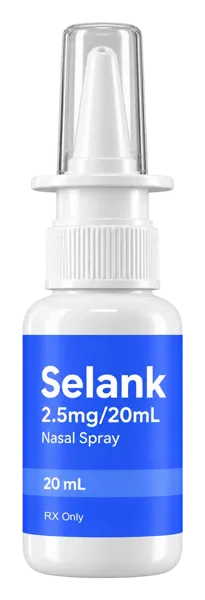
People asking about peptides for anxiety mostly mean Selank, a Russian peptide often sold as a nasal spray. Small Russian trials in anxiety patients reported calming effects similar to benzodiazepines; Semax and DSIP have mainly animal data or old clinical reports with no placebo group described. None has large independent trials, and none is a substitute for anxiety care such as therapy or medication.
First, the plain part: no peptide is a substitute for anxiety care. Generalized anxiety disorder is usually treated with psychotherapy, medication or both, and the US National Institute of Mental Health’s advice for anyone worried about their mental health is to “talk to a primary care provider” (NIMH). If you are in crisis, call or text 988 in the US. What follows is an evidence summary of the peptides people try for anxiety, mostly Selank, what the small studies actually measured, and what people who use them report.
Are there peptides for anxiety?
Yes, in the sense that a few peptides have been studied for anxiety, but none is an established anxiety treatment in the US. The one with human anxiety trials is Selank, a Russian peptide tested in small trials against benzodiazepines (Zozulia et al., 2008; Medvedev et al., 2014). Semax and DSIP come up in the same conversations, but their anxiety data are mostly animal studies or old clinical reports with no placebo group described. A US pharmacology review described Selank as one of the “poorly studied Russian drugs” sold to US consumers (Doyno and White, 2021).
Which peptides do people try for anxiety, and why?
Most of the conversation is about Selank, with Semax and DSIP as supporting acts in stacks. By goal, the picture looks like this:
- Selank, for calm without sedation. A synthetic seven-amino-acid peptide studied in Russia as an anti-anxiety drug. In a lab receptor-binding study it acted on GABA binding as a positive allosteric modulator, the same broad target as benzodiazepines, at a binding site the authors describe as apparently not the same as diazepam’s, though possibly partly overlapping (Vyunova et al., 2018). Our guide to Selank and the stress response covers the mechanism in more depth.
- Semax, for focus, sometimes paired with Selank. A Russian peptide built from a fragment of the hormone ACTH, studied mainly for cognition. People tend to try it for focus, not anxiety; see Selank vs Semax.
- DSIP, for sleep and evening wind-down. Delta sleep-inducing peptide is a small brain peptide studied mainly for sleep; see what is studied about DSIP for sleep.
- Oxytocin, for social anxiety. A hormone that is also a peptide, given as a nasal spray in research. It has been tested in a randomized trial for social anxiety disorder (results below).
What does the research on peptides for anxiety show?
The evidence level, stated plainly: small human trials for Selank, animal studies for Semax, old clinical reports with no placebo group described for DSIP, and one small negative-on-the-main-outcome randomized trial for oxytocin. The table sets out what kind of evidence exists for each and what was actually measured.
| Attribute | Selank | Semax | DSIP |
|---|---|---|---|
| Human anxiety studies | Yes: small Russian trials in anxiety patients | None found | Old reports in alcohol and opiate withdrawal |
| Largest human study found | 70 patients (Selank added to phenazepam) | Brain-imaging study in healthy people, not anxiety | 107 inpatients in withdrawal, no placebo group described |
| Outcome measured | Anxiety rating scales (Hamilton, Zung, CGI) vs benzodiazepines | Rat anxiety and depression behavior tests | Clinician and nurse ratings of withdrawal symptoms |
| Animal anxiety or stress data | Yes, rats (a chronic mild stress model) | Yes, rats | Sleep-focused; anxiety not a main target |
| Evidence level in words | Small human trials plus animal studies | Animal studies only, for anxiety | Old human reports with no placebo group described, plus animal studies |
| Main research focus | Anxiety and stress | Cognition | Sleep |
Selank: small human trials
Three Russian trials carry most of the weight:
- Selank vs medazepam (2008): 62 patients with generalized anxiety disorder and neurasthenia, 30 on Selank and 32 on the benzodiazepine medazepam, assessed with the Hamilton, Zung and CGI scales. The anxiety-reducing effects were similar, and Selank also showed “antiasthenic and psychostimulant effects” (Zozulia et al., 2008).
- Selank vs phenazepam (2014): 60 patients with phobic-anxiety and somatoform disorders. The authors reported pronounced anti-anxiety and mild nootropic effects, lasting a week after the last dose (Medvedev et al., 2014).
- Selank added to phenazepam (2015): 70 patients, 30 on phenazepam alone and 40 on phenazepam plus Selank. The combination brought on the benzodiazepine’s effect earlier and reduced several of its side effects, including sedation and memory problems (Medvedev et al., 2015).
These are real trials, but they are small, published mainly in Russian, and come from overlapping Moscow research groups, with no independent Western replication that we could find.
Semax: animal data only for anxiety
Semax’s anxiety evidence is in rats. In one study, intranasal Semax did not change the emotional state of normal rats, but it normalized anxiety and depression-like behavior that had been triggered by a chemical (CCK-4) (Levitskaia et al., 2010). The closest human work is a 2020 brain-imaging study in 52 healthy people that measured connectivity between the amygdala and the temporal cortex after Semax, Selank or placebo, a brain-network measure, not an anxiety outcome (Panikratova et al., 2020).
DSIP: old reports with no placebo group
The only anxiety-adjacent human data for DSIP we found come from withdrawal. In a 1984 report, 107 inpatients in alcohol or opiate withdrawal received intravenous DSIP, and the authors reported that most patients’ symptoms improved quickly, with headaches in a few, but they noted that “anxiety, however, was slower to decrease” (Dick et al., 1984). The abstract describes no placebo group. The controlled DSIP trials we found were in insomnia, and their authors judged its effect of little clinical benefit (Bes et al., 1992; Monti et al., 1987).
Oxytocin: one randomized trial, no overall benefit
Oxytocin is the one peptide in this list tested for anxiety in a Western randomized, double-blind, placebo-controlled trial. In 25 people with social anxiety disorder, oxytocin nasal spray given alongside exposure therapy improved how participants rated their own appearance and speech performance during sessions, but it did not improve overall treatment outcome: both groups reported similar symptom reduction (Guastella et al., 2009).
Which is the best peptide for anxiety?
The evidence cannot name a “best” peptide for anxiety, because no study has compared these peptides against each other. Selank is the only one with published human anxiety trials, and those compared it with benzodiazepines, not with other peptides (Zozulia et al., 2008). That makes Selank the most studied option for anxiety in this group, which is a narrower claim than “best.” Next to the drugs and therapies used in standard anxiety care, all of these peptides have far less evidence (NIMH). PeptideAgent’s evidence review of peptides for anxiety comes to the same conclusion and weighs Selank against cognitive behavioral therapy and SSRI or SNRI medication, the proven first-line treatments.
Are there peptides for anxiety and depression?
Depression has even less peptide evidence than anxiety. Semax showed antidepressant-like effects in a 2024 rat study of chronic unpredictable stress, reversing stress-induced loss of interest in sugar water and a drop in a brain growth factor (BDNF), though it did not change results in a forced-swim test (Inozemtseva et al., 2024). That is an animal finding, not a treatment for depression in people. Anyone dealing with depression, especially with thoughts of self-harm, should talk to a clinician, and in the US can call or text 988 at any time.
Are there peptides for stress and anxiety?
Stress is where most of the animal research sits. The Semax rat study above found it attenuated markers of chronic stress load, including adrenal enlargement (Inozemtseva et al., 2024). In a rat chronic mild stress study, Selank combined with diazepam was the most effective option for reducing stress-raised anxiety on a maze test (Kasian et al., 2017). In people, though, the only stress-related anxiety outcomes are the small Selank trials in diagnosed anxiety disorders, not studies of everyday stress in healthy people.
Are there peptides for sleep and anxiety?
Some people pair Selank with DSIP in the evening, but no study has tested that combination, and neither peptide has good evidence as a sleep aid. DSIP’s controlled insomnia trials found weak effects (Bes et al., 1992). Selank’s trial data point away from sedation: the 2008 trial reported “psychostimulant” effects (Zozulia et al., 2008), and in the 2015 add-on study, longer sleep was listed among the benzodiazepine side effects that Selank reduced (Medvedev et al., 2015).
What are the side effects of peptides for anxiety, and who should be cautious?
Side effects are poorly characterized for all of these, which is a gap rather than a sign of safety. The Selank trial abstracts focus on benefits and say little about Selank’s own side effects; the DSIP withdrawal report mentions headaches in a few patients (Dick et al., 1984). Because Selank appears to act on GABA receptors and changed how benzodiazepines affected GABA binding in lab tests (Vyunova et al., 2018), anyone taking benzodiazepines, other sedatives or psychiatric medication has a specific reason to talk to a clinician first. Product quality is a separate issue: a Belgian lab identified Selank and Semax in seized preparations and noted that these peptides are freely available online as powders for injection or in nasal sprays; the authors added that, to their knowledge, Selank and Semax had not completed any clinical trials (Vanhee et al., 2020).
How do Selank, Semax and DSIP compare, and do people stack them?
In practice they are treated as a set with different jobs: Selank for calm, Semax for focus, DSIP for sleep. The Selank and Semax pairing is a frequently mentioned stack in the posts we track, and no trial has tested it as a combination. The 2020 imaging study gave each peptide to separate groups, so it says nothing about using them together (Panikratova et al., 2020). For the head-to-head, read Selank vs Semax; for more on the nasal spray format, see our Selank nasal spray explainer.
What does Selank cost compared with standard care?
We do not list prices on this page. Selank is sold online in more than one format, as nasal sprays and as powders for injection (Vanhee et al., 2020), so cost depends on the seller and the format, and price says nothing about the strength of the evidence. Our Selank nasal spray explainer covers what one storefront listed. Standard anxiety care, such as therapy and established medications, is the route with the strongest evidence (NIMH).
What do people say about peptides for anxiety?
People who post about Selank mostly describe taking it for anxiety and feeling calmer without feeling sedated. Our Community Insights summary of 9 Selank posts on X (July 2026) found anxiety relief to be the most cited reason people discuss it, with one poster calling it a personal “life saver” and several framing it as an “anxiolytic with no sedation.” Stacking it with Semax for focus was another common theme. The summary’s rough, non-scientific sentiment estimate was mostly positive, with about a fifth of posts skeptical.
The DSIP and Semax summaries add context. In 9 DSIP posts, some users described pairing DSIP with Selank in the evening to wind down, with mixed personal results, and several said DSIP did little or nothing for them (DSIP community page). In 13 Semax posts, users described Semax as the focus half of the pair and Selank as the calming half (Semax community page). These are individual accounts from small samples, not evidence that the peptides work. For a broader research overview, see the Selank monograph on The Treatment Report.
Can peptides replace anxiety treatment?
No. The peptide evidence is small trials and animal work, while standard care for generalized anxiety disorder, such as cognitive behavioral therapy and established medications, rests on a much larger research base (NIMH). If you are curious about Selank, bring it up with the provider who knows your history rather than adding it alongside other medications on your own.
Status: Not FDA-approved; sold by some telehealth providers as a compounded prescription. What these status terms mean.
Educational information only, not medical advice, and not a guide to dosing. Research statements are sourced to the peer-reviewed literature and the NIMH page linked above and reflect small human trials and animal studies; community statements summarize our Community Insights data and are anecdotal. Updated October 12, 2026.
Sources (16)
Advertising disclosure: links marked "Paid link" go to Bodybuilding Peptides (trybbpeptides.com), an affiliate destination, and Cognition Protocols may earn a commission if you buy there. Our coverage is independent of that relationship, and nothing on this page is medical or legal advice.
 See it at Bodybuilding Peptides