Selank nasal spray: why the nasal format, what the research studied, and what users report

The short answer
Selank is a seven-amino-acid peptide developed in Russia and studied mainly as an intranasal anti-anxiety drug. Small Russian trials compared it with benzodiazepines and reported similar calming effects plus mild stimulating or nootropic effects. In rat tracer work the nasal route delivered the most to the brain. We found no trial testing it combined with Semax.
Search for Selank and almost every result is a nasal spray. That is not a marketing quirk. Selank was developed and studied in Russia largely as an intranasal peptide, and it is often discussed alongside its better-known sibling Semax. This page covers why the nasal format dominates, how it compares with injection and with the Semax combination, what the small and mostly Russian clinical literature measured, and what people who use it say it feels like. For the deeper anxiety research, see our guide to Selank and the stress response.
What is Selank, and why is it sold as a nasal spray?
Selank is a synthetic heptapeptide (Thr-Lys-Pro-Arg-Pro-Gly-Pro) described as a derivative of the natural peptide tuftsin (Semenova et al., 2010; Vyunova et al., 2018), and it is sold as a nasal spray largely because intranasal dosing is the route the Russian research leaned on. In a rat study that tracked tritium-labeled Selank after intraperitoneal, intranasal, intragastric and intravenous dosing, the authors concluded that intranasal administration was “optimal for the delivery” of these peptides to the central nervous system (Ashmarin et al., 2008). Oral dosing is a poor fit for peptides in general: a review of nose-to-brain peptide delivery notes that orally administered peptides are poorly absorbed and broken down by stomach acid and digestive enzymes, and describes the nasal route as a way to reach the brain noninvasively, bypassing the blood-brain barrier through the olfactory and trigeminal nerves (Alabsi et al., 2022). The same review sets out the limitations and challenges of nasal delivery, so “nasal” does not mean “efficient.”
Russian tracer work also studied Selank’s breakdown in blood plasma and its pharmacokinetics in brain tissue after intranasal dosing, and identified shorter fragments (the pentapeptide TKPRP, the tripeptide TKP and two dipeptides) as its main breakdown products (Zolotarev et al., 2006). That is animal and lab data, not a human pharmacokinetic study.
What does Selank do, and what is it used for?
In the research, Selank is an anti-anxiety (anxiolytic) peptide first, with a secondary focus on fatigue, stress and memory; in the community, people mostly use it for calm without sedation and pair it with Semax for focus. The lab work points at the brain’s GABA system: one Russian lab receptor-binding study reported that Selank acts on GABA binding as a positive allosteric modulator, the same broad target as benzodiazepines, at a binding site the authors describe as apparently not the same as diazepam’s, though possibly partly overlapping (Vyunova et al., 2018), and a rat chronic-stress study found it enhanced the anti-anxiety effect of diazepam (Kasian et al., 2017). Intranasal Selank has also been shown to regulate BDNF, a growth factor tied to learning, in the rat hippocampus (Inozemtseva et al., 2008). For how Selank compares with the other peptides people try for anxiety, see our summary of peptides for anxiety.
By goal, the uses break down like this:
- Anxiety and stress: the main clinical research target and the most common reason people discuss it.
- Fatigue (asthenia): the 2008 Russian trial reported “antiasthenic” effects alongside the calming one (Zozulia et al., 2008).
- Focus and memory: studied mostly in rats; in the community this job usually goes to Semax, with Selank as the calming half of the pair.
What did the mostly Russian clinical literature study?
The human evidence is small trials in Russian patients with anxiety disorders, published mainly in Russian-language journals, which puts it at the level of “small human trials plus animal studies,” well short of large independent trials. The three most cited are:
- Selank vs medazepam (2008): 62 patients with generalized anxiety disorder and neurasthenia, 30 on Selank and 32 on the benzodiazepine medazepam, rated on the Hamilton, Zung and CGI scales. The anxiolytic effects were similar, and Selank also showed “antiasthenic and psychostimulant effects.” PubMed indexes the trial under intranasal administration (Zozulia et al., 2008).
- Selank vs phenazepam (2014): 60 patients with phobic-anxiety and somatoform disorders. The authors reported pronounced anxiolytic and mild nootropic effects, and an anxiolytic effect that lasted for a week after the last dose (Medvedev et al., 2014).
- Selank as an add-on to phenazepam (2015): 70 patients, 30 on phenazepam alone and 40 on phenazepam plus Selank. The combination reportedly brought the benzodiazepine’s effect on earlier and reduced some of its side effects, including attention and memory problems, sedation and longer sleep (Medvedev et al., 2015).
These are real trials, but they are small, share authors from the same Moscow research groups, and have not been replicated in Western trials. A US pharmacology review put it bluntly, grouping Selank with phenibut as “poorly studied Russian drugs” sold to US consumers (Doyno and White, 2021). The fair summary: a consistent signal for anxiety in a handful of Russian studies, and little else in people.
Is the nasal spray different from Selank injections?
Yes, in animals the route changes what Selank does, and there is no human study comparing the two. A 2016 mouse study gave Selank either by injection into the abdomen or intranasally for five days and found anxiolytic and nootropic effects by both routes, but only in an anxious strain of mice. The brain chemistry differed by route: injection raised GABA receptor binding in the frontal cortex by 38%, while the nasal route instead raised NMDA receptor binding in the hippocampus by 23% (Vasil’eva et al., 2016). Combined with the rat tracer finding that the nasal route delivered the most peptide to the brain (Ashmarin et al., 2008), the research gives no support to the idea that an injection is a stronger upgrade. Semax tells a similar story; see Semax nasal spray vs injection.
Both formats are sold online. A Belgian lab that identified Selank and Semax in two seized preparations noted that these peptides are freely available as powders for injection or in nasal sprays, and that, to the authors’ knowledge, they had not completed any clinical trials (Vanhee et al., 2020).
Can you use Semax and Selank nasal spray together?
People do, but we found no published trial that has tested the two together. The closest human study is a 2020 brain-imaging trial in 52 healthy people who received Semax, Selank or placebo in separate groups; it found general and specific effects of each peptide on connectivity between the right amygdala and the right temporal cortex, which is a brain-network measurement, not a test of anxiety or focus (Panikratova et al., 2020). The logic of the pairing comes from the two separate research profiles: Semax for cognition, Selank for calm. As of October 12, 2026, the one Semax and Selank combination listed at Bodybuilding Peptides is an injectable vial, while its Selank and Semax nasal sprays are sold separately. For the full side-by-side, read Selank vs Semax.
| Attribute | Selank nasal spray | Selank injection | Semax + Selank |
|---|---|---|---|
| Route the developers studied | Yes, intranasal | Used in animal studies | Each studied separately |
| Brain delivery (rat tracer data) | Best of the routes tested | Lower than intranasal | Not studied as a combination |
| Human trials | Small Russian anxiety trials | None found comparing it with the spray | No combination trial found |
| Evidence level | Small human trials plus animal studies | Animal studies; no human route comparison | Rationale only, from separate profiles |
| What community posts describe | Calm without sedation | Not a theme in our sample | Focus plus calm stacks |
| Listed price (one storefront) | $188 per month | Not sold alone there | $274 per month (injectable combo) |
Is Selank a nootropic?
Partly: Selank is classed first as an anxiolytic, with nootropic effects reported as a secondary finding. The 2014 trial described its nootropic effect in patients as “mild” (Medvedev et al., 2014), and the stronger memory data are from rats, where a single dose given during learning increased memory trace stability over 30 days (Semenova et al., 2010). We found no trials in healthy people showing it improves focus or memory. It earns the nootropic label in the community mostly by reputation and by its pairing with Semax.
Does Selank help sleep?
There is no published study of Selank for sleep, so the honest answer is that it is unknown. A PubMed search for Selank and sleep returns no trial with sleep as an outcome. The trial data actually point away from sedation: the 2008 study reported “psychostimulant” effects (Zozulia et al., 2008), and in the 2015 add-on study, longer sleep was listed among the benzodiazepine side effects that Selank reduced (Medvedev et al., 2015). Community posts also describe Selank as non-sedating (see below), which fits that picture but is anecdotal.
What are the side effects of Selank, and who should be cautious?
The published abstracts report little about Selank’s own side effects, which is a gap, not proof of safety. The trial abstracts focus on benefits; the 2015 add-on study reports that Selank reduced some benzodiazepine side effects, but says little about Selank’s own. The trials were small and short, and there are no long-term safety studies. Because the lab work points at GABA receptors and, in lab binding tests, Selank changed diazepam’s effect on GABA binding (Vyunova et al., 2018), anyone taking benzodiazepines, other sedatives or psychiatric medication has a real reason to talk to a clinician first. Anxiety disorders also deserve proper assessment; a nasal spray is not a substitute for care. Finally, what is in a given bottle depends on who made it, a point the Belgian seized-product analysis makes directly (Vanhee et al., 2020).
How much does Selank nasal spray cost?
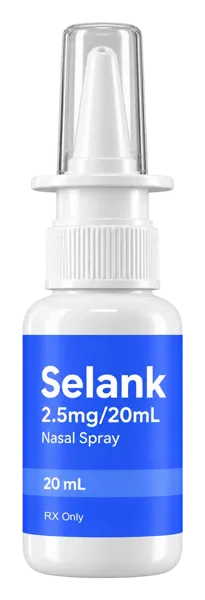
As of October 12, 2026, Bodybuilding Peptides lists its Selank nasal spray (2.5 mg in 20 mL) at $188 per month, with no three-month plan shown. For comparison, the same storefront lists its Semax nasal spray at $188 per month ($152 per month on a three-month plan) and its Semax / Selank injectable combination at $274 per month ($217 on a three-month plan). These are one seller’s listed prices from its product pages, not a market average, and price says nothing about the strength of the evidence.
How do you feel on Selank? What the community says
People who post about Selank mostly describe feeling calmer without feeling sedated. Our Community Insights summary of 9 Selank posts on X (July 2026) found anxiety relief to be the most cited reason people use it, with one poster calling it a personal “life saver,” and several framing it as an “anxiolytic with no sedation.” Stacking it with Semax for focus was another common theme, along with users explaining its mechanism in GABA and stress-axis terms. These are individual accounts from a small sample, and the summary rated the tone as mostly positive with a meaningful skeptical minority. For a broader research overview, see the Selank monograph on The Treatment Report.
Status: Not FDA-approved; sold by some telehealth providers as a compounded prescription. What these status terms mean.
Educational information only, not medical advice, and not a guide to dosing. Research statements are sourced to the peer-reviewed literature linked above and reflect small, mostly Russian human trials and animal studies; community statements summarize our Community Insights data and are anecdotal; prices are as listed on October 12, 2026. Updated October 12, 2026.
Sources (14)
Advertising disclosure: links marked "Paid link" go to Bodybuilding Peptides (trybbpeptides.com), an affiliate destination, and Cognition Protocols may earn a commission if you buy there. Our coverage is independent of that relationship, and nothing on this page is medical or legal advice.
 See it at Bodybuilding Peptides